
Most warehouse WiFi issues don’t appear on a network dashboard - they show up on the floor.
It’s the picker whose scanner keeps dropping out. The forklift driver is waiting for a system update.
Or the team loses time every shift because systems lag or fail.
In almost every warehouse we survey, the problem isn’t bandwidth - it’s coverage, interference, or poor design.
Here’s where reliable WiFi actually makes a difference.
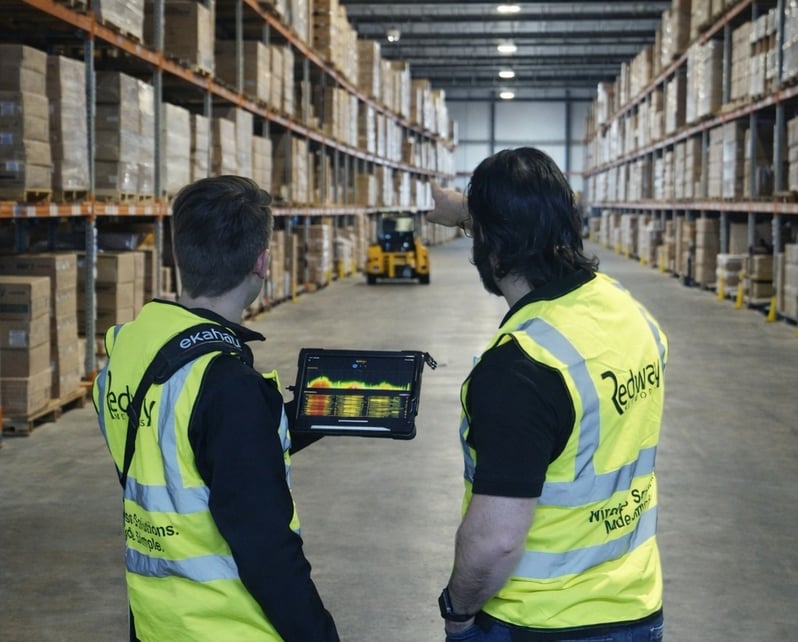
WiFi Problems Cost More Than You Think
In a typical warehouse environment, even small connectivity issues have a knock-on effect:
- Scanners fail to sync in real time
- Staff repeat tasks due to missing data
- Orders are delayed or picked incorrectly
We regularly see warehouses where a handful of WiFi blackspots are responsible for hours of lost productivity every week. It's well worth getting your network assessed.
Coverage Matters More Than Speed
Many warehouses already have “fast internet” - but still struggle.
Why?
Because warehouse environments are difficult for WiFi:
- High racking blocks signal
- Metal shelving causes reflections
- Large open spaces create inconsistent coverage
This leads to:
Strong signal in one aisle - and nothing in the next
Fixing this isn’t about upgrading broadband - it’s about properly designing the network.
Mobility Only Works With a Reliable Signal
Warehouse teams rely on:
- Handheld scanners
- Tablets
- Voice picking systems
But these only work properly if the connection is stable.
We often see devices:
- reconnecting constantly
- switching between access points
- or dropping entirely in key areas
That’s where performance drops - not because of speed, but because of inconsistent coverage.
Automation Depends on Network Reliability
As warehouses adopt:
- AGVs
- robotic picking
- automated systems
WiFi stops being “helpful” and becomes critical infrastructure.
These systems rely on:
- continuous connectivity
- low latency
- zero dropouts
Even brief interruptions can:
- stop operations
- cause delays
- or trigger safety issues
Interference Is Often the Hidden Problem
One of the most common issues we find during surveys is interference.
In warehouses, this can come from:
- other WiFi networks
- handheld devices
- machinery
- even poorly configured access points
It’s not always visible - but it has a major impact on performance.
Why a Proper WiFi Survey Matters
Most businesses try to fix WiFi issues by:
- adding more access points
- upgrading hardware
But without understanding the root cause, this often makes things worse.
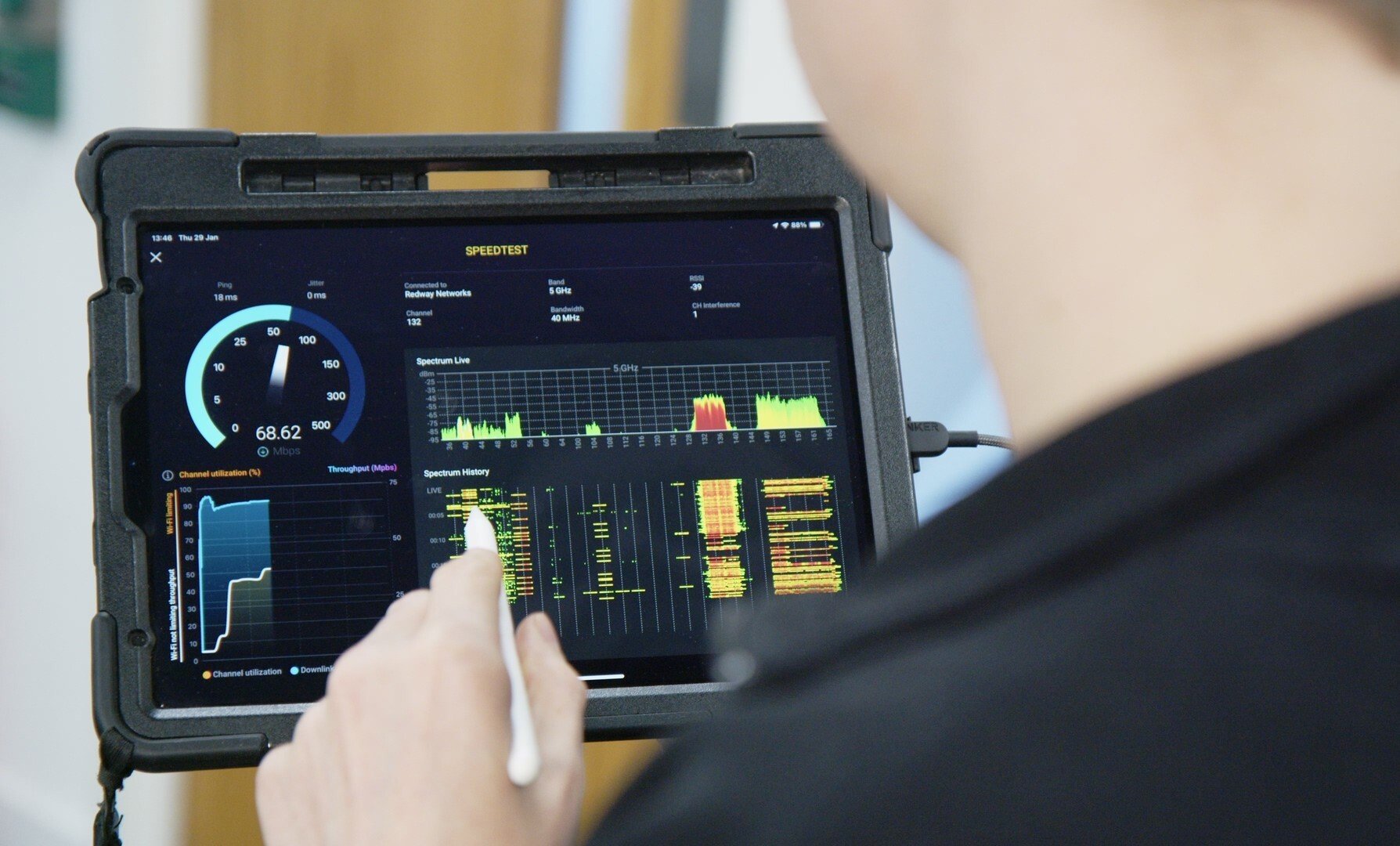
A proper WiFi survey shows:
- exactly where coverage drops
- where interference is occurring
- how devices behave in real conditions
Future-Proofing Your Warehouse Network
As more devices connect - from scanners to IoT sensors - the demands on your network increase.
But future-proofing isn’t just about new technology.
It’s about: Building a network that actually works in your environment
Start With a Clear Diagnosis
If your warehouse WiFi is slow, unreliable, or inconsistent, the first step isn’t replacing hardware - it’s understanding what’s really happening. You can also explore some of our case studies to see how we’ve helped similar environments.
Start with a FREE WiFi health check and get a clear picture of your network performance.
If needed, a full site survey can then map out exactly how to fix it.
For more details about wireless networks, contact us or
speak to our expert team on 01908 046400